How to choose the right halter for your horse?
At first impression, it may seem like a simple question what kind of halter we should choose for our horsebut in reality, it’s not that simple at all.
Today, there are countless options available on the market: traditional, padded, fleece-lined, rope halters, or even combinations of these. But still: When should you use which type?
The right halter depends on several factors, including:
- your horse age
- level of training
- whether it is a mare, gelding, or stallion
- a your horse temperament
- and also how it will be used
It makes a difference whether the halter is only used for leading the horse, for tying up the horse, for use during transport, to leave it on in the paddockor for groundwork and training. Which we are looking for the right equipment for.
Traditional, padded, and fleece-lined halters
If your horse is already well trained, easy to lead, stands calmly when tied, and is generally easy to handle, then a good choice may be:
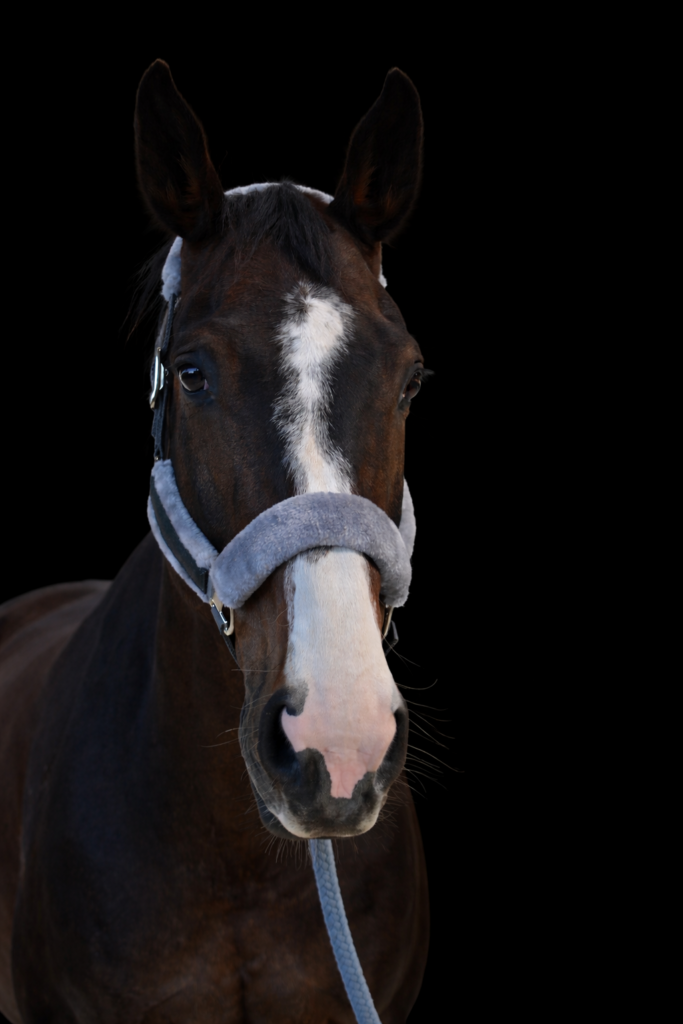
- traditional halter
- padded halter
- halter with fur
These models are very practical in everyday use and, in many cases, are also more comfortable for the horse.
Why do many people prefer padded or fleece-lined models?
The padded and fleece-lined halters generally provide a more comfortable wearing experience, especially for more sensitive horses or during longer periods of use.
However, it is important to know that these models distribute pressure more softly, which in some cases means the horse may respond less sharply to cues.
In simpler terms:
if something is more comfortable and “softer,” the horse will often take it less seriously than a more direct and precise pressure tool.
This does not mean that these are bad options — only that they are not always the best choice in every situation.
What should you pay attention to when buying a traditional halter?
The most important factor when it comes to traditional halters is quality.
Pay special attention to the following:
- the carabiners
- the buckles
- and the other metal components
are made from strong, reliable materials..
A good halter must be durable for everyday use, while for safety reasons it is also important that it has a certain breaking strength limit.
This means that in extreme situations, such as panic or if the horse gets caught, it should be designed to break under a certain level of force in order to help prevent serious injury.
Many people are concerned about this, but it is unnecessary:
a high-quality halter will not break from a small pull.
What is a traditional halter used for?
A traditional halter is generally suitable for:
- leading the horse
- tying the horse
- use in a horse trailer
- everyday stable tasks
It is one of the most versatile types, which is why it is a staple piece for many horse owners.
The rope halter – useful, but not a toy
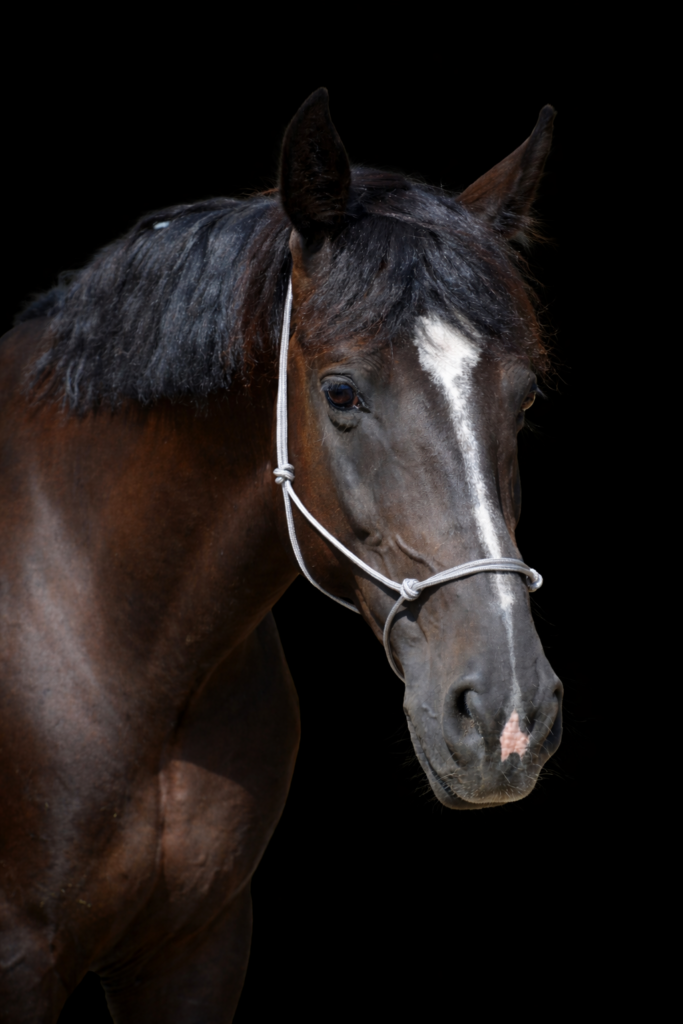
The knotted rope halter is for many people primarily associated with the western world, but today it is used in many different training disciplines.
It is a very useful tool, but only when it is used with proper knowledge and intention.
What is a rope halter used for?
The rope halter is primarily:
- for groundwork
- for training
- for starting young horses
- for leading more difficult-to-handle horses
- for handling stallions in certain situations
In such cases, it can be a good choice
Thanks to its thinner yet strong material, it applies more direct and precise pressure, so the horse can clearly perceive the cues.
That is why it is very important that the person using it understands what they are doing.
What is a knotted rope halter NOT suitable for?
This is one of the most important parts:
The knotted rope halter is not suitable for tying a horse.
There are several reasons for this:
- it is usually made from strong rope
- its purpose is precisely that it should not break easily
- if the horse panics and pulls back, it can cause serious injury
- due to the knots and thin material, it applies much stronger pressure
That is why a horse should never be tied up and left unattended in it, especially not without proper experience.
A csomózott kötőfék képzési eszköz, nem „divatdarab” .
The placement of the knots and correct fitting are crucial
The effect of a knotted rope halter is not accidental.
The knots on it apply pressure at specific points, and these provide a large part of the communication to the horse.
That is why it is very important that:
- the knots are placed correctly
- a csomók jól legyenek megkötve
- the halter fits properly
- the fitting is neither too loose nor too tight
- the final knot is tied correctly
Many people make the mistake of simply “putting it on somehow”, even though with a knotted rope halter the way it is fitted also has a function.
Why is the correct knot important?
If the horse makes a stronger pull, the knots can easily tighten. This is natural.
However, if the halter is not tied properly, it can tighten so much that it becomes difficult or even impossible to untie afterwards.
That is why with this type, proper use is especially important.
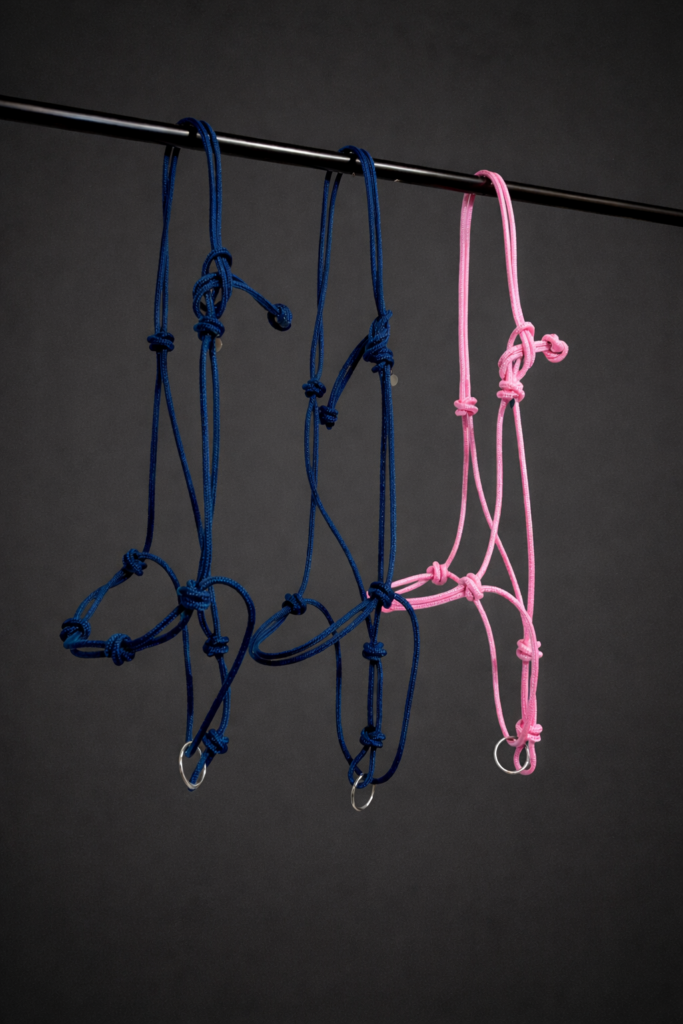
Types of knotted rope halters
There are also several different types of knotted rope halters.
1. Two-knot version
This is the most well-known, classic design, which many people use for basic groundwork and general training situations.
2. Four-knot version
This generally applies stronger, more direct pressure, so it is usually used in situations where clearer and more assertive communication is needed.
3. Ring version
You may also come across knotted rope halters that have a ring at the lower part.
This provides a bit of extra flexibility in the halter, which in certain types of work can be more comfortable for both the horse and the handler.
The right lead rope also matters
Knotted rope halters are often used with a matching training lead rope.
This is not accidental: the right lead rope is not only visually matching, but also functionally important.
The lead rope is attached to the halter using a special knot, so that it cannot come undone during work.
This is especially important when:
- doing groundwork
- working with a young horse
- or working with a more sensitive, highly reactive horse
The knotted rope halter is not a fashion accessory
This is a point that is discussed less often, yet it is very important.
The knotted rope halter is even less suitable as a “fashion item” than traditional halters.
It is not a good idea if it is full of:
- fur
- decorations
- crystals
- flowers
- dangling elements
- or anything that can get caught or applies pressure in the wrong place
With a tool like this, function is always more important than decoration.
And what about combined models?
Nowadays, there are also many models available that combine the features of traditional and knotted rope halters.
These can be very practical in certain situations, especially when someone is looking for a compromise solution for multiple purposes.
However, the same basic principle still applies:
What matters is not fashion, but what best suits your horse and the situation you intend to use it in.
The best halter is always the one that truly fits your horse and the purpose for which you intend to use it. A conscious choice makes a significant difference in the long run for both the horse and its owner.